Expert Excavation Services
Top Digging Service Provider Solutions for Your Upcoming Construction Project
Choosing the right excavation contractor is essential for any building endeavor. These professionals play an vital role in ground readiness, ensuring a sturdy foundation and adequate water management. Their understanding of various soil types and security procedures can greatly impact successful completion. However, learning to select the best contractor involves more than just credentials. The complexities of their services and modern techniques deserve further exploration to secure the optimal results.
Understanding the Role of an Excavation Professional
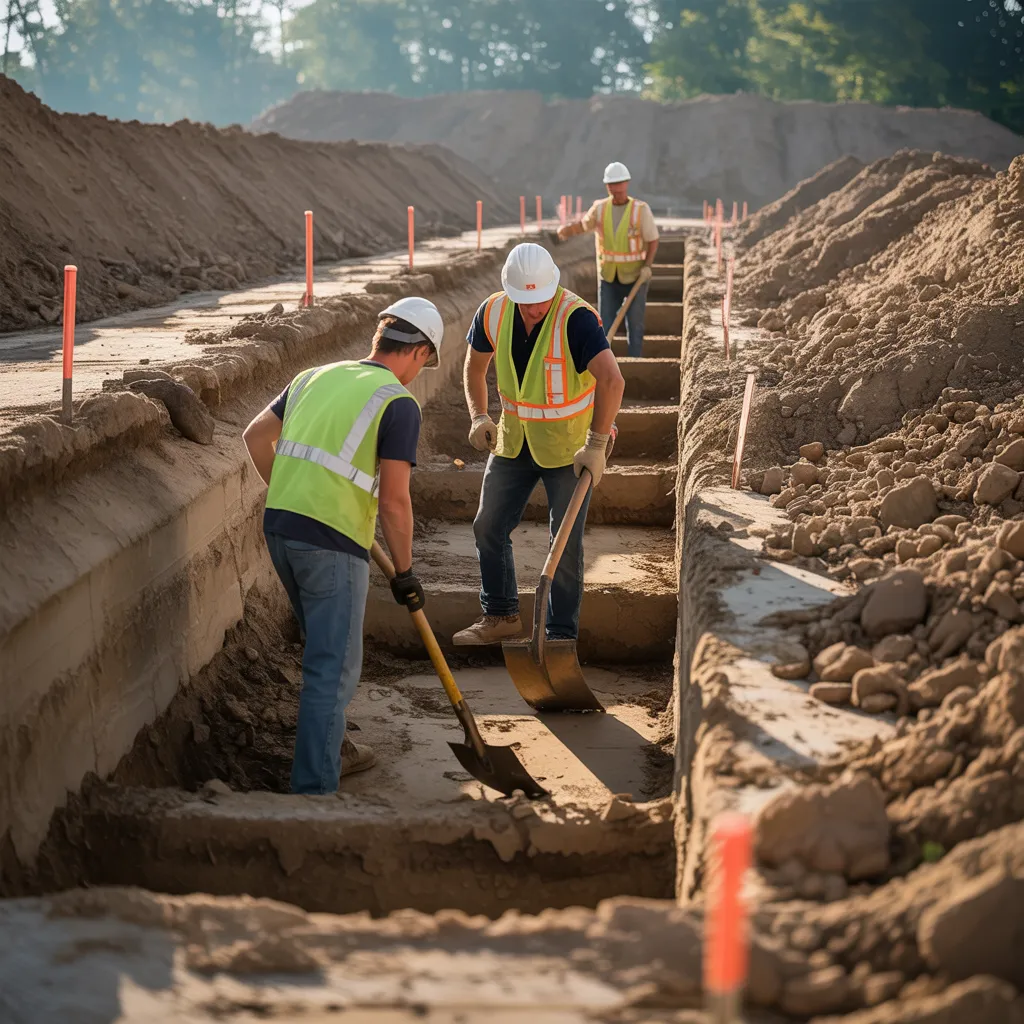
An excavation contractor serves as a vital component in the construction process, functioning as the foundation for any building project. They are accountable for preparing the site, which involves removing obstacles from the land, evening out the ground, and excavating trenches for utilities and foundations. This contractor must have comprehensive knowledge of soil characteristics, drainage systems, and regional requirements to ensure adherence and protection. Their expertise encompasses evaluating risks and establishing preventive measures to mitigate excavation hazards during excavation. Additionally, they partner with other construction professionals, guaranteeing that excavation aligns seamlessly with the overall project timeline. The excavation contractor also operates heavy equipment and work teams, maximizing productivity while adhering to budget constraints. By laying the groundwork for subsequent construction phases, they serve a critical function in affecting the project's outcome, making their contributions invaluable to the entire construction process.
Primary Solutions Offered by Excavation Contractors
Excavation contractors furnish a varied selection of essential offerings that are vital for the successful execution of construction projects. These services typically consist of site preparation, where contractors clear the land of waste material, vegetation, and existing structures to generate a suitable foundation. Grading is another notable service, ensuring the land is properly graded to support proper drainage and support for the structure.
Additionally, earthwork specialists are tasked with digging trenches for utilities, such as water, gas, and electricity, which are essential for building infrastructure. They also conduct foundation excavation, removing soil and rock to create a dependable platform for new structures. Contractors may deliver targeted expertise like demolition, where they safely dismantle existing buildings, and soil stabilization to enhance ground conditions. These key services collectively promise the groundwork is correctly supervised, laying the foundation for a successful construction project.
Importance of Safety in Excavation Work
Construction ventures naturally include various risks, especially in excavation work involving heavy machinery and deep digging. Safety remains essential in this sector to shield workers, local residents, and the integrity of the project. Excavation sites contain hazards such as cave-ins, equipment mishaps, and exposure to underground utilities. Consequently, implementing strict safety protocols is crucial.
Excavation contractors should give precedence to training and compliance with safety regulations, ensuring that all personnel have the required skills and knowledge to identify and mitigate risks. Regular safety audits and equipment inspections further enhance site safety. Additionally, utilizing proper signage and barriers can help prevent unauthorized access and accidents. Ultimately, a strong safety culture not only safeguards lives but also promotes project efficiency and reduces costs associated with accidents and delays. A commitment to safety reflects a contractor's professionalism and dedication to delivering successful outcomes in excavation work.
Contemporary Equipment in Excavation Processes
With the ongoing progress of technology, the excavation industry is experiencing important developments that boost efficiency and accuracy in operations. Modern machinery outfitted with GPS and laser-guided systems permits accurate grading and depth control, lowering the chances of human error. Drones are more frequently employed for site surveys, supplying real-time data and aerial images that enhance project planning and monitoring. Moreover, 3D modeling software allows contractors to visualize project layouts, streamlining excavation processes and cutting down waste.
Automation is creating significant changes, with robotic excavators and advanced telematics systems strengthening machine performance and servicing schedules. These tools not only accelerate workflows but also elevate safety by observing ground factors and equipment functionality. By implementing such advanced systems, excavation contractors can complete projects more optimally, assuring speedy fulfillment while maintaining high-quality levels of safety standards. This technological evolution represents a critical turning point in how digging undertakings is managed today.
Determining the Perfect Excavation Contractor
How can one guarantee the choice of a qualified excavation contractor? The process starts with in-depth examination. Prospective clients should seek endorsements from market specialists and review online testimonials. Reviewing a contractor's experience in equivalent undertakings is paramount, as it indicates their capability to tackle distinct location issues.
Next, verifying insurance and license documentation ensures adherence with local regulations and protects against legal risks. A qualified contractor should also furnish a detailed portfolio of past work, showcasing their proficiency and quality benchmarks.
Furthermore, it is vital to examine the contractor's equipment and technology, since up-to-date equipment can substantially boost performance and security.
To summarize, honest conversation is required; a contractor should be inclined to exchange ideas about project timelines, potential issues, and strategies. By using these approaches, clients can confidently pick an excavation contractor who satisfies their project requirements and goals.
Cost Factors in Excavation Operations
Comprehending the cost factors in excavation services is essential for proper project budgeting. Major aspects include the size of the project, which directly influences the volume of material to be moved, and site accessibility, which can affect equipment requirements and labor efficiency. Moreover, equipment and labor costs change widely based on the specific demands of the excavation task at hand.
Project Dimensions Consequence
The scale of a construction project strongly affects the cost of excavation services, as larger sites usually require more detailed planning and inputs. Excavation quantity grows with project size, causing higher labor, equipment, and material costs. In addition, bigger projects may call for more advanced technology and specialized machinery, thereby raising expenses. The difficulty of the terrain also holds a significant role; larger areas may show varied geological conditions that need tailored excavation methods. Moreover, extensive projects tend to involve longer timelines, leading to increased overhead costs. All these aspects combined emphasize the importance of accurately evaluating project size to properly budget for excavation services, ensuring that contractors can deliver the necessary work effectively and within budget restrictions.
Site Accessibility Considerations
Site accessibility considerably impacts the cost of earthmoving operations, as it dictates the ease with which equipment and materials can reach the project area. If a site is hard to access due to narrow roads, steep grades, or urban traffic, extra measures may be necessary. These may include custom equipment, extensive planning, or even road modifications, all of which can increase overall expenses. Moreover, restricted entry can prolong work timelines, contributing to increased labor and equipment rental expenses. In contrast, a site with simple access can enable smooth processes, reducing expenses. In the end, understanding site approachability is essential for accurate financial planning and planning, as it serves as a crucial role in establishing the overall viability and cost of earthmoving projects.
Tools and Labor Costs
While digging projects necessitate careful planning and execution, equipment and workforce costs emerge as significant factors that can markedly influence total expenses. The type of machinery utilized, such as excavators, bulldozers, and backhoes, greatly affects pricing. Equipment rental or purchase costs, along with maintenance and fuel expenses, can add up quickly. Additionally, the expertise and number of laborers needed for the project play a central role in determining labor costs. Skilled operators command higher wages, indicating their specialized training. Furthermore, project duration can increase costs, as longer timelines often require extra labor hours and equipment rental days. Consequently, a thorough understanding of these cost factors is important for accurately budgeting excavation services in construction projects.
Project Examples: Accomplished Excavation Projects
Numerous excavation projects have demonstrated the essential role of skilled construction experts in guaranteeing positive construction outcomes. One notable case centered on a commercial office complex in an city center, where contractors encountered challenging soil conditions. Through innovative techniques, featuring ground stabilization and adequate drainage infrastructure, the project was accomplished on deadline, reducing disturbances to nearby commercial entities.
Another example is a housing project where the contractor's expertise in land grading enabled effective drainage control. This not only improved the real estate's worth but also ensured adherence with local regulations.
In addition, a large-scale infrastructure explanation project demonstrated the importance of synchronization between earth-moving crews and utility companies. By harnessing sophisticated mapping tools for underground surveying, the construction firms forestalled costly delays and upheld the wellbeing of existing utilities.
These case studies illustrate that seasoned excavation experts are vital for managing challenges, consequently contributing significantly to the overall prosperity of construction endeavors.
Frequently Requested Questions
What Credentials Should I Consider in an Excavation Professional?
When choosing an excavation company, one should consider qualifications such as proper licensing, insurance coverage, experience in similar projects, safety credentials, equipment quality, and strong references to guarantee reliability and professionalism in their work.
How much duration should you expect for an excavation undertaking?
An excavation project typically spans anywhere from a few days to several weeks, subject to factors like project size, site conditions, and complexity. Each project is unique, modifying the overall timeline substantially.
Which Kinds of Equipment Do Excavation Contractors Operate?
Excavation contractors regularly leverage bulldozers, backhoes, excavators, and dump trucks. These machines optimize various tasks, including digging, grading, and transporting materials, ensuring timely project delivery while adhering to safety standards and environmental regulations.
Excavation Work in Winter: Is It Performed?
Excavation activities may be executed in winter, but it creates challenges such as frozen ground and unfavorable weather patterns. Builders often leverage specialized equipment and approaches to handle these challenges and maintain productivity during winter periods.
What Licenses Do You Require for Excavation Projects?
Excavation ventures usually necessitate permits such as land disturbance permits, excavation permits, and perhaps environmental permits. Local standards differ; therefore, it's critical for builders to communicate with local governing bodies to ensure compliance with all necessary requirements.